Technologies
Central Tower
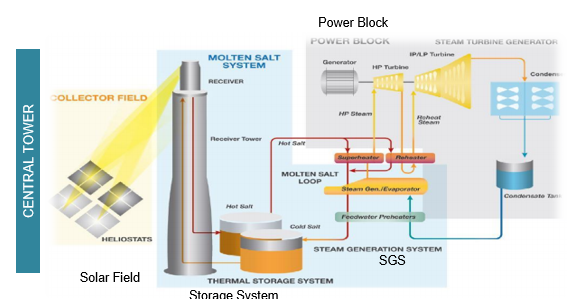
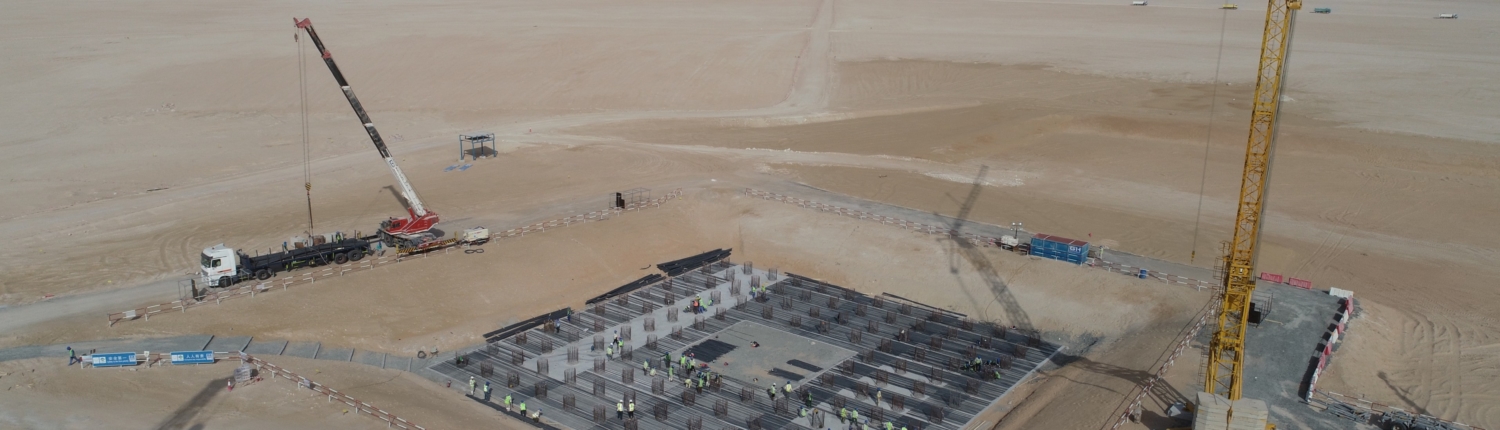
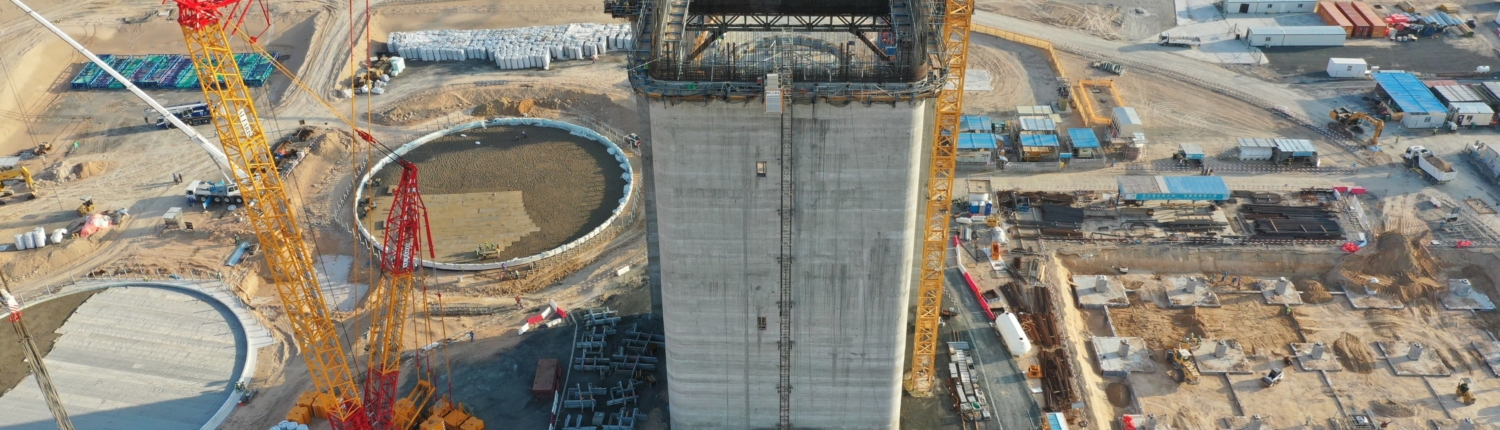
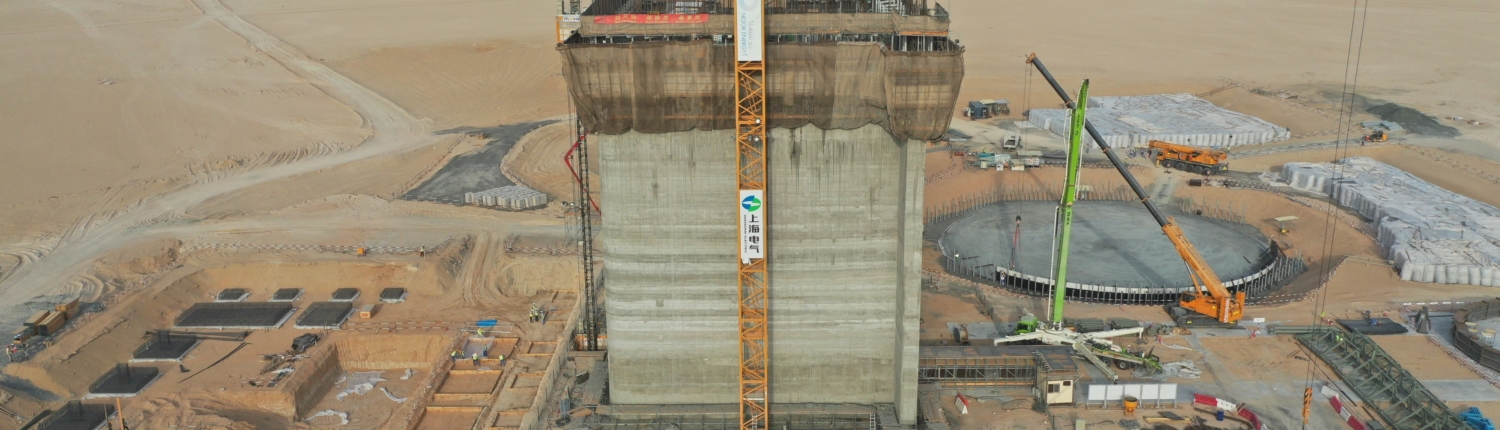
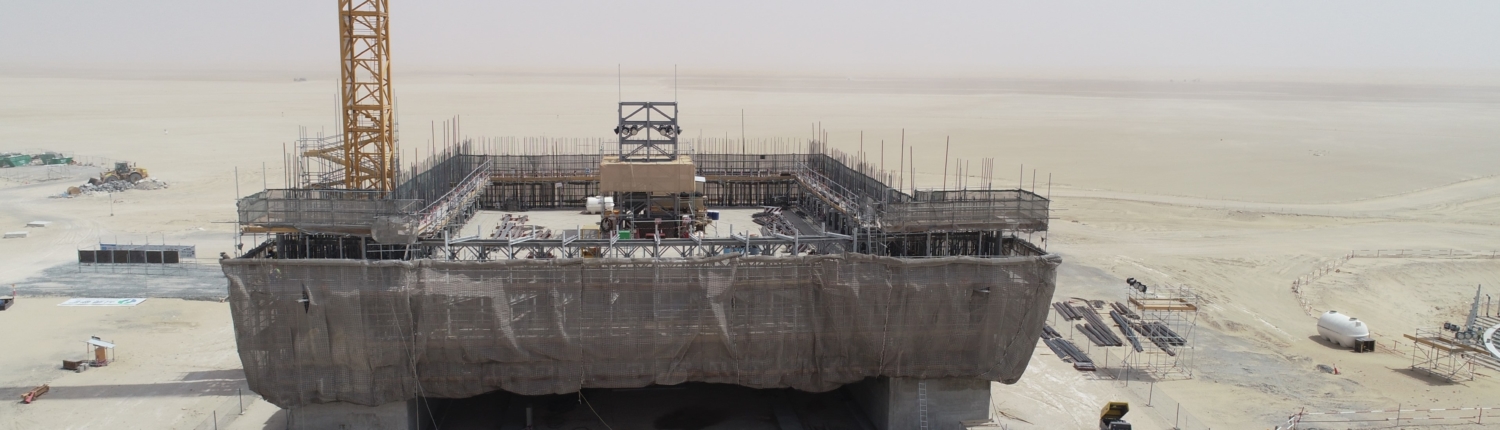
The solar power tower, also known as ‘central tower’ power plants or ‘heliostat’ power plants or power towers, is a type of solar furnace using a tower to receive the focused sunlight. It uses an array of flat, movable mirrors (called heliostats) to focus the sun’s rays upon a collector tower (the target). Concentrated solar thermal is seen as one viable solution for renewable, pollution-free energy.
Early designs used these focused rays to heat water, and used the resulting steam to power a turbine. Newer designs using liquid sodium have been demonstrated, and systems using molten salts (40% potassium nitrate, 60% sodium nitrate) as the working fluids are now in operation. These working fluids have high heat capacity, which can be used to store the energy before using it to boil water to drive turbines. These designs also allow power to be generated when the sun is not shining.
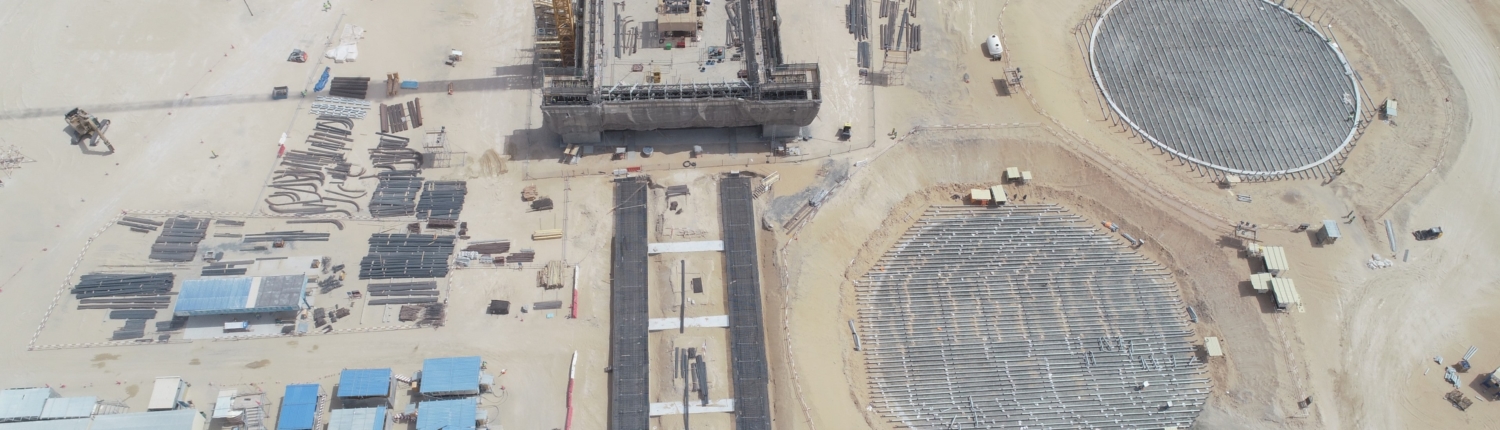
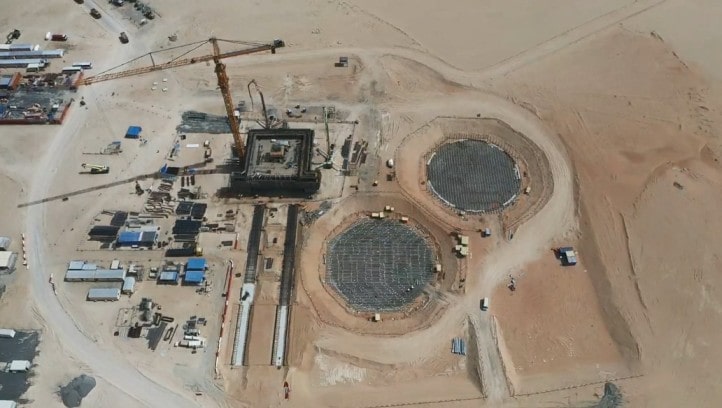
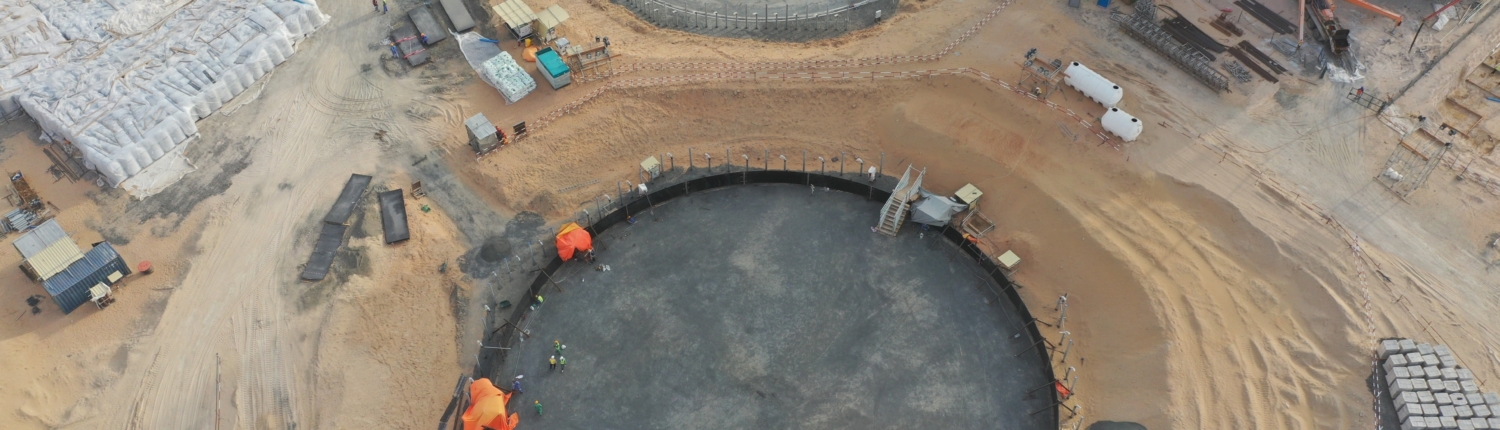
Parabolic Trough
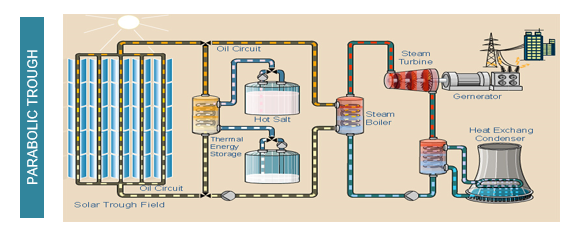
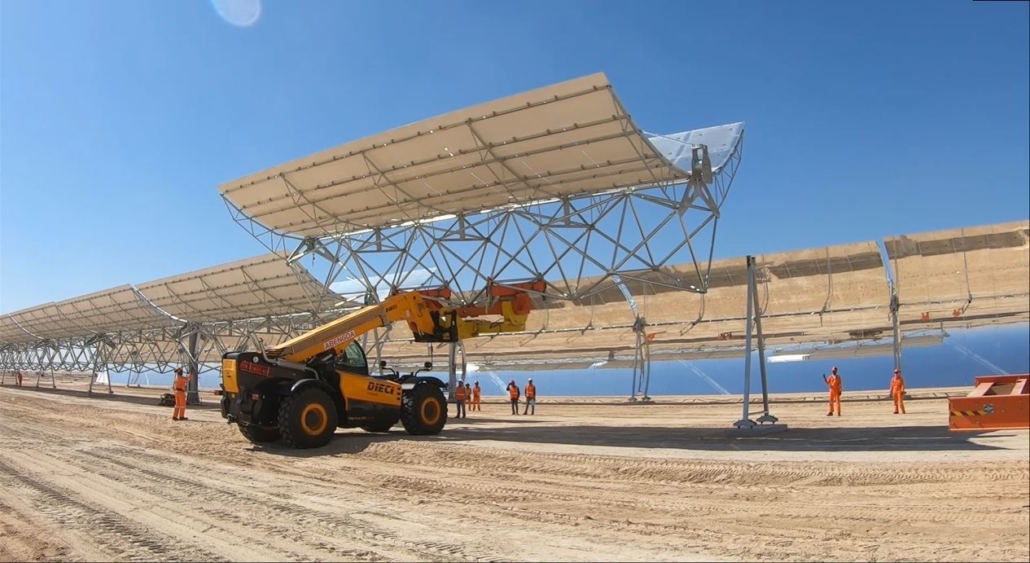
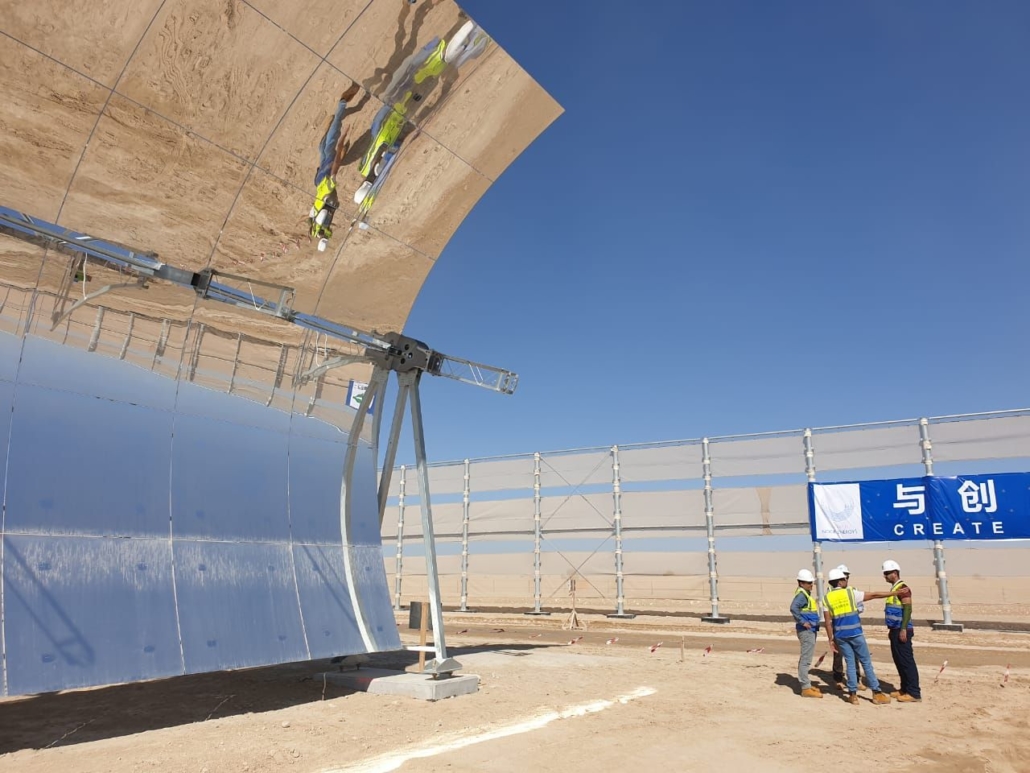
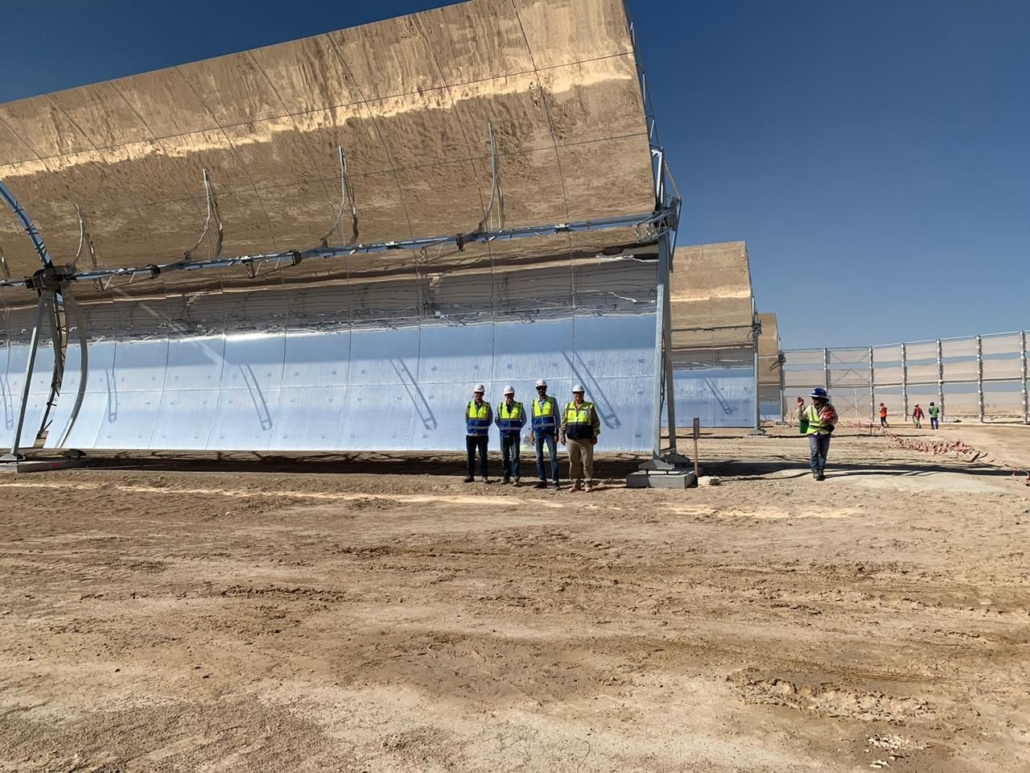
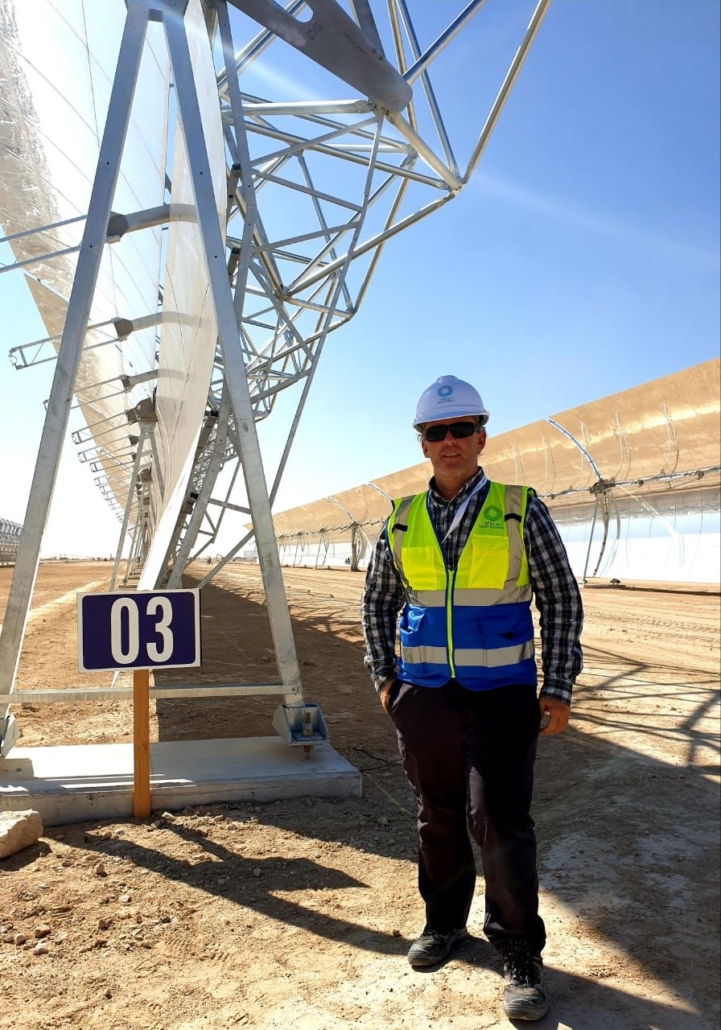
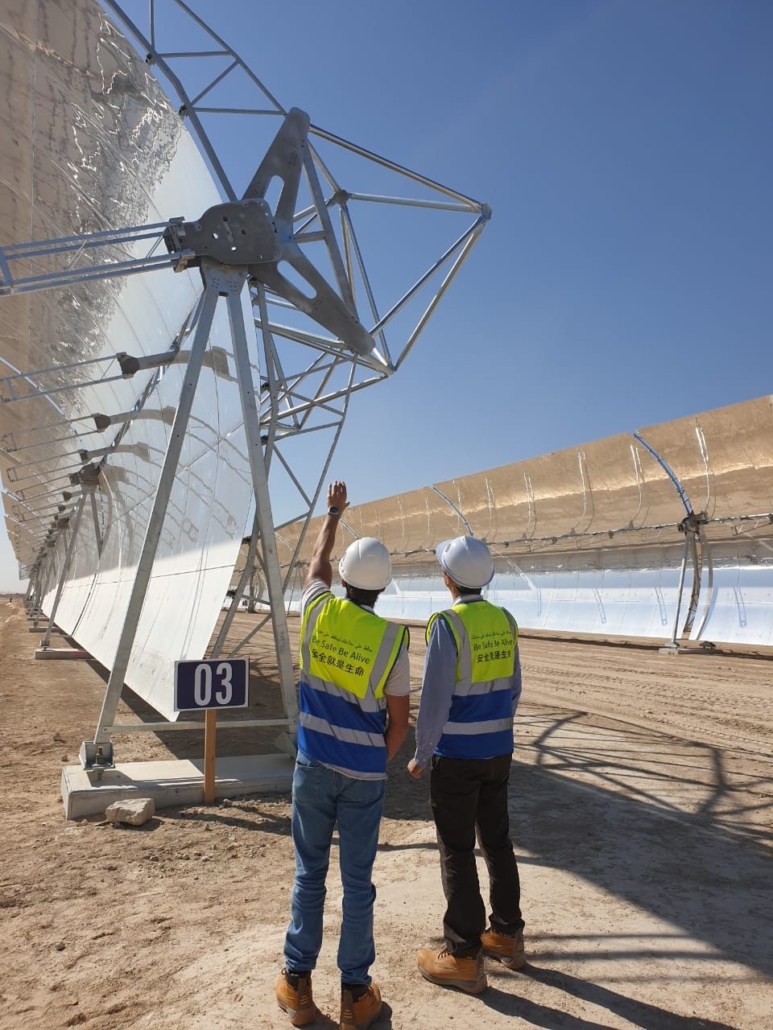
The key principle of a parabolic trough plant is to transform solar primary energy into electricity by means of a solar field with parabolic trough technology. The parabolic trough collectors track the sun from East to West in order to maximize the electricity generation. In their focus line they have absorber tubes through which the Heat Transfer Fluid (HTF) circulates. This thermal fluid consists of a eutectic mixture of diphenyl and biphenyl oxide (type Therminol VP1, Dowtherm A or equivalent) with a freezing temperature of around 12 ºC. During sun hours, the parabolic collectors of the solar field concentrate radiation on the collection pipes and heat the transfer fluid up to a temperature of 393ºC. The energy contained in this fluid can be transferred directly into the steam generator or it can be sent to a thermal storage system (two molten salt tanks) where it will be kept for its later use.
The parabolic trough power plant might be operated in different modes. In the direct operation mode, the heat transfer fluid flows from the solar field to the solar steam generation system where the main steam is produced at a temperature around of 380ºC and pressure of 100 bar, passing the fluid through different (or just one) parallel trains of heat exchangers, each one composed by three heat exchangers connected in series (preheater, evaporator and superheater). Also a train of heat exchangers in parallel are used to produce reheat steam. The heat exchangers cool the HTF fluid and send it to the solar field to be reheated. The excess of the energy is sent to the TES system. The HTF acts as a mean for the transfer of heat between the solar field and the water–steam cycle generation plant, being heated in the solar collectors and cooled when producing the steam demanded by the steam turbine-generator. The steam produced is sent to the generation plant where it expands in a steam turbine activating the relevant electricity generator. The steam-water cycle is a classical Rankine regenerative cycle with one steam reheating. In addition to an Auxiliary PV is connected to CSP electrical auxiliaries Busbar to supply auxiliary power during the day.
Photovaltaic
The Plant is composed of the two (2) following PV facilities:
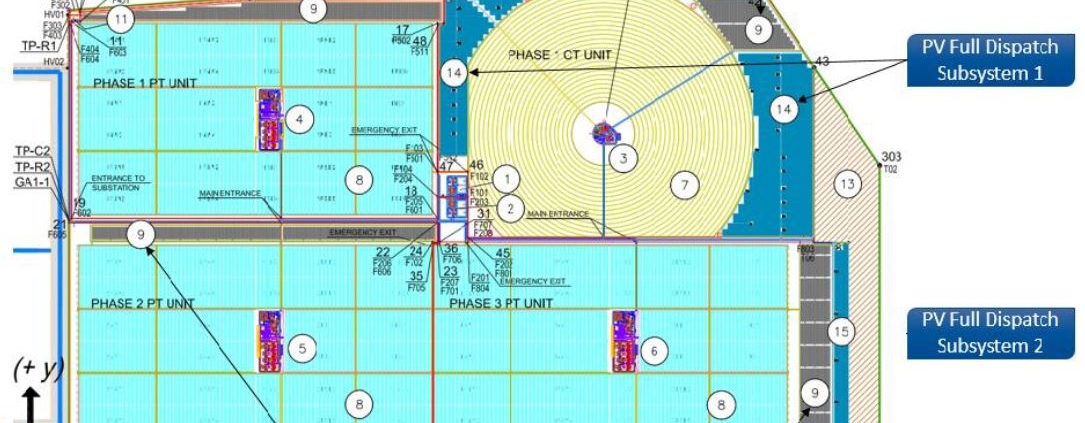
- One (1) complete PV facility included in the CT Unit with a net export capacity of 217 MWac.
- One (1) complete PV facility included in the PT3 Unit with a net export capacity of 33 MWac.
The Plant is to be located within the Project Site boundary and adjacent to the CSP Plant/s to be built by the Contractor.
Electrical interconnection will be done at the 400kV Intermediate Substation.
N type monocrystalline bifacial PV module (full frame):
- PV Full Dispatch Subsystem 1 – 400Wp Installation capacity 127.5008MWp, 405Wp Installation capacity 150.255MWp, total 277.7558MWp (total front side peak power).
- PV Full Dispatch Subsystem 2 – 415Wp Installation capacity 42.25032MWp (total front side peak power).